
 By
By Why babies need to burp, how to do it correctly, and when to stop worrying.
As a lactation professional, I always tell new mothers:
👉 Burping is not about perfection it’s about comfort.
👉 Some babies burp easily, some take time, and some don’t burp at all.
And all of this is normal.
This guide will help you understand when, why, and how to burp your baby in a calm, confident way.
🌼 Why Do Babies Need to Be Burped?
Babies swallow small amounts of air while:
- breastfeeding
- bottle-feeding
- crying
- sucking vigorously
- during fast milk let-down
This trapped air may make a baby:
- fussy
- squirmy
- gassy
- uncomfortable
- spit up more
Burping helps release this air and keeps feeding comfortable.
But remember:
✔ Not all babies swallow a lot of air.
✔ Breastfed babies often need less burping than bottle-fed babies.
🌼 Signs Your Baby Needs to Burp
Look for these gentle cues:
- Pulling off the breast repeatedly
- Fussing or arching the back
- Clenched fists
- Squirming during feeding
- Crying suddenly
- Tight belly
- Clicking sounds while breastfeeding (air intake)
These cues mean it’s a good time to pause and burp.
🌼 When Should You Burp Your Baby?
For Breastfed Babies
- When switching from one breast to the other
- When baby pulls away or becomes fussy
- After the feed if baby seems uncomfortable
Note: Many exclusively breastfed babies burp very little this is normal.
For Bottle-Fed Babies
- After every 30–60 ml
- When baby slows down sucking
- After finishing the bottle
🌼 The 3 Most Effective Burping Positions (Lactation-Approved)
These positions are gentle, safe, and work for newborns as well as older babies.
🟦 1. Shoulder Burping (Most Common & Effective)

- Hold baby upright against your shoulder
- Support head and neck
- Pat or gently rub baby’s back
- Keep movements soft and rhythmic
📝 Tip: If baby doesn’t burp in 1–2 minutes, switch position.
🟩 2. Sitting Burping (Great for Babies With Reflux)
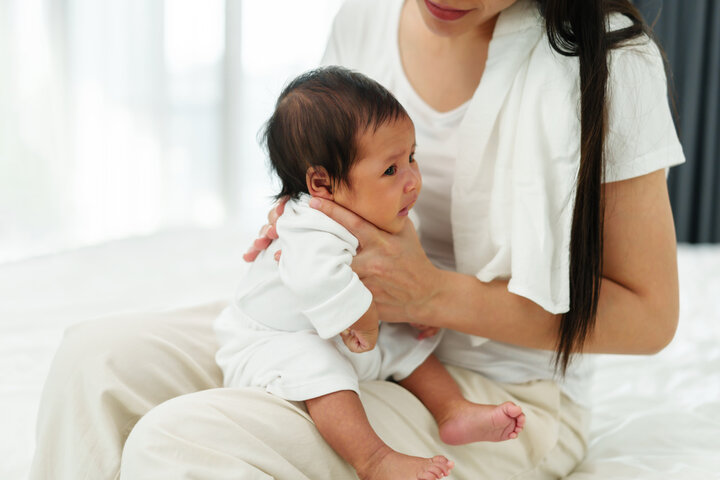
- Sit baby on your lap facing sideways
- Support head by holding chin and jaw (not throat)
- Lean baby slightly forward
- Rub or pat gently
This keeps air moving upward.
🟧 3. Face-Down on Lap (Calming Position)

- Lay baby tummy-down across your thighs
- Support baby’s head higher than chest
- Pat gently on the back
This position is especially helpful for gassy babies.
🌸 How Long Should You Burp a Baby?
There is no strict rule every baby is different.
General guide:
- Try for 1–2 minutes
- If no burp, continue feeding or switch positions
- Don’t burp for long periods babies get tired
Sometimes, even after feeding, some babies simply don’t burp and that’s perfectly fine.
🌼 Do All Babies Need Burping?
Breastfed Babies
Often swallow less air → may burp rarely.
Bottle-Fed Babies
Swallow more air → may need more frequent burping.
Babies With Strong Let-Down
May swallow extra air.
Colicky or Gassy Babies
Often benefit from frequent burping pauses.
🌼 What If My Baby Doesn’t Burp?
If baby:
- is calm
- is feeding well
- sleeps peacefully
- is not fussy
➡ Then not burping is completely okay.
Some babies naturally burp less.
🌼 Burping & Reflux (Important Note)
Babies with reflux benefit from:
- upright burping
- smaller, more frequent feeds
- slow and calm feeding
Avoid:
❌ bouncing
❌ pressing on stomach
❌ burping too vigorously
Gentle movements work best.
🌼 How Long Should You Continue Burping?
Most babies need burping until:
👉 4–6 months
Once babies start sitting and moving more, trapped air naturally escapes.
🌼 Common Burping Myths (Corrected by a Lactation Expert)
❌ Myth: Baby must burp after every feed
✔ Truth: Many breastfed babies don’t burp at all.
❌ Myth: No burp = stomach pain later
✔ Truth: If baby is comfortable, it’s fine.
❌ Myth: Pat harder to get the burp out
✔ Truth: Burping should always be gentle.
❌ Myth: Burping prevents all gas
✔ Truth: Gas also comes from digestion not just swallowed air.
🌻 A Gentle Note for Mothers
Mama, burping is not an exam you need to pass.
You are learning your baby’s comfort language and you’re doing a beautiful job.
If your baby doesn’t burp every time, please know:
🌸 It is normal
🌸 It is safe
🌸 You are doing everything right
Your calmness is your baby’s comfort. 🤍
Disclaimer
The information on this website is for educational purposes only and is not a substitute for professional medical advice. Always consult a qualified healthcare provider for personal medical concerns.