 By
By A complete guide by a Lactation & IYCF Professional
When parents begin solids, one of the biggest concerns is:
“What should I not give my baby?”
With so much family advice, cultural beliefs, and marketing pressure, it becomes confusing.
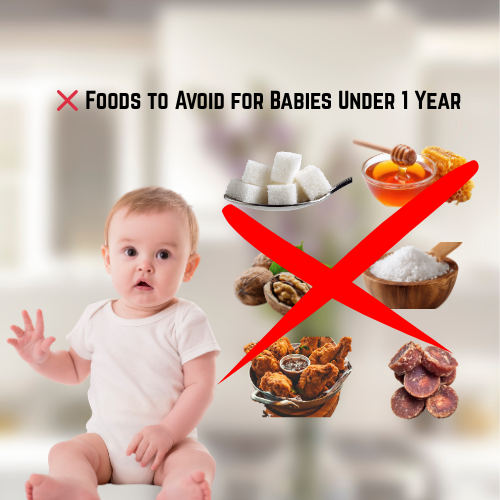
As a PharmD, Lactation Professional & IYCF expert, here is a clear, science-backed list of foods that must be avoided for babies under one year.
🚫 1. Avoid Salt (NO Salt Before 1 Year)
Babies’ kidneys are immature and cannot handle extra sodium.
Why avoid:
- kidney strain
- high blood pressure later
- dehydration
Alternatives:
✔ add ghee
✔ add breastmilk
✔ add natural flavors (cinnamon, jeera, ajwain water for aroma)
🚫 2. Avoid Sugar, Jaggery, Honey (Including Homemade Sweets)
Sugary foods displace nutritious meals and increase infection risk.
Why avoid:
- honey can cause infant botulism
- early sugar increases risk of obesity, cavities
- appetite reduces for real food
- gut bacteria imbalance
Alternatives:
✔ sweet potato
✔ banana
✔ apple
✔ fruit purées
🚫 3. Avoid Cow’s Milk as a Drink (Before 1 Year)
Cow milk is too high in protein and minerals for babies.
Why avoid:
- risk of anemia
- kidney overload
- allergies
- poor iron absorption
Allowed:
✔ Cow milk in small quantities in recipes like kheer (AFTER 9 months)
❌ NOT as main drink.
🚫 4. Avoid Honey & Honey Water (Strictly No Before 1 Year)
Even a tiny amount of honey can cause botulism a serious illness.
This includes honey in hot water, cough syrups, or “natural remedies.”
🚫 5. Avoid Whole Nuts & Chunky Nut Butters
These are major choking hazards.
Instead:
✔ smooth nut powder mixed into foods
✔ thinly spread peanut butter on soft bread (8+ months)
🚫 6. Avoid Juices (Fruit Juices, Packaged or Fresh)
Juices even homemade offer sugar without fiber.
Why avoid:
- high sugar
- no nutrients
- diarrhea risk
- affects appetite
- dental issues
Give fruits whole or mashed, not juiced.
🚫 7. Avoid Fried, Processed & Packaged Foods
Avoid:
- biscuits
- chocolates
- chips
- packaged cereals
- flavored yogurts
- “baby rusks”
- Cerelac substitutes
- commercial powders
These are low-nutrient, high-salt, high-sugar foods.
🚫 8. Avoid Tea, Coffee, Horlicks/Boost or Energy Drinks
These contain caffeine and interfere with iron absorption.
🚫 9. Avoid Salted/Sweetened Snacks from Family Plate
Family snacks are often spicy and oily.
Avoid giving:
- namkeen
- salted peanuts
- murukku
- samosa
- pakora
- pickles
- papads
🚫 10. Avoid Hard or Round Foods That Increase Choking Risk
Avoid giving foods that are:
- hard
- round
- coin-shaped
- sticky
- tough to bite
Examples:
- whole grapes (always cut lengthwise)
- whole cherry tomatoes
- raw carrot sticks
- popcorn
- raw apple
- hard chikki
- chunks of cheese
Babies must eat soft, mashable, age-appropriate textures.
🚫 11. Egg Whites? (MYTH)
Egg whites are NOT unsafe.
They are allowed from 6 months unless baby has allergies.
✔ Fully cooked eggs are safe.
❌ Avoid half-boiled or runny eggs.
🚫 12. Traditional Remedies to Avoid
These are commonly recommended but unsafe:
❌ ghee or castor oil to “clean stomach”
❌ plain water feeds before 6 months
❌ gripe water
❌ honey-ghutti
❌ jaggery-water
❌ diluted milk
These interfere with baby’s natural gut development and immunity.
🚫 13. Avoid Foods Too Watery or Low-Nutrient
Avoid:
- rice water
- dal water
- rasam water
- watery soups
They fill the stomach but provide zero nutrition, delaying weight gain.
Always give semi-solid, spoon-fed foods instead.
🚫 14. Avoid Hardly Cooked & Raw Animal Foods
Avoid:
- undercooked eggs
- raw meat
- raw fish
- sushi
- unpasteurized dairy
Risk: food poisoning, parasites.
🌟 Key Rule to Remember
“If it is too salty, sugary, spicy, hard, sticky, or processed it is not for your baby.”
Safe foods:
✔ homemade
✔ fresh
✔ soft
✔ nutrient-dense
✔ baby-friendly textures
💛 A Gentle Note for Parents
You don’t need fancy products or complicated recipes.
Babies grow wonderfully on simple, homemade, natural foods.
Your love, responsiveness, and consistency matter more than anything else.
Disclaimer
The information on this website is for educational purposes only and is not a substitute for professional medical advice. Always consult a qualified healthcare provider for personal medical concerns.