
 By
By Breast pumps can feel confusing in the beginning.
Many mothers wonder:
Do I really need a pump? Which one should I choose? Am I doing it correctly?
If you’re feeling unsure, you’re not alone. As a lactation professional, I often meet mothers who feel overwhelmed by all the information around pumping.
The good news is you don’t need to know everything at once.
Understanding a few simple basics can make your pumping journey much easier and more comfortable.
What Is a Breast Pump?
A breast pump is a device that helps remove milk from your breasts when your baby is not feeding directly.
It allows you to:
- Express milk for later use
- Maintain or increase milk supply
- Continue giving breast milk when you are away from your baby
Pumping is not a replacement for breastfeeding but it is a helpful support tool when needed.
The World Health Organization emphasizes that breast milk remains the best nutrition for babies, whether given directly or expressed.
https://www.who.int/health-topics/breastfeeding
When Do You Need a Breast Pump?
Not every mother needs a pump, and that’s completely okay.
However, pumping can be helpful in many real-life situations:
- Your baby is not latching well
- Your baby is premature or unwell
- You want to increase milk supply
- You are returning to work
- You need flexibility in feeding
If you’re just starting, you can also read our guide on pumping for beginners to understand how to begin confidently.
Types of Breast Pumps
Choosing a pump becomes easier when you understand the basic types.
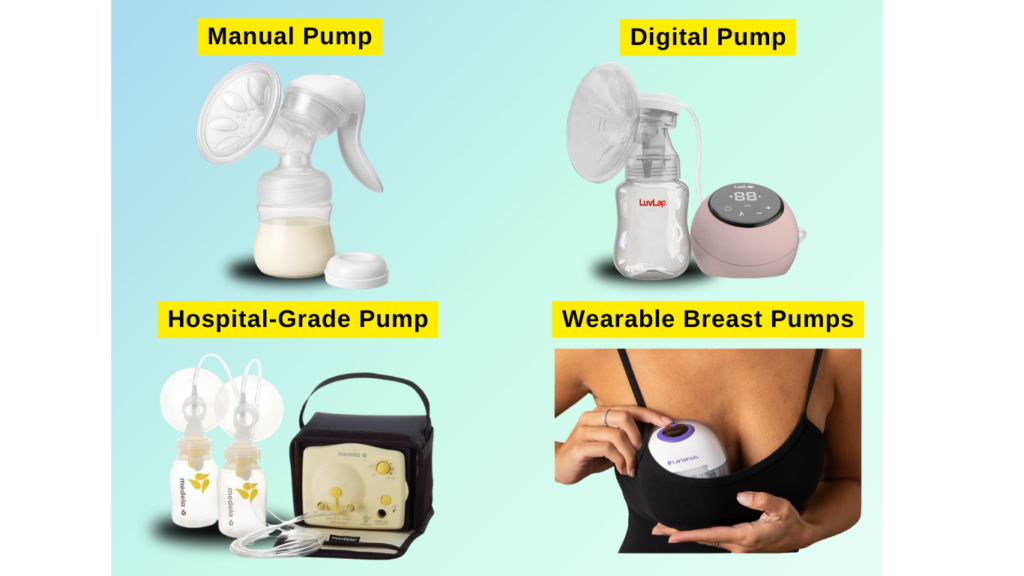
Manual Pumps
- Hand-operated
- Suitable for occasional use
- Portable and budget-friendly
Electric Pumps
- Automatic suction
- Useful for regular pumping
- Saves time and effort
Double Electric Pumps
- Pump both breasts at once
- More efficient
- Helps maintain milk supply better
Wearable Pumps
- Hands-free and portable
- Useful for working mothers
- Offers flexibility
👉 You can explore more in our detailed guide on types of breast pumps.
How Pumping Works
Pumps work by creating suction that mimics your baby’s sucking.
This helps:
- Stimulate milk production
- Trigger milk flow (let-down reflex)
- Remove milk effectively
Your body produces milk based on demand.
👉 More milk removal = more milk production
If you want to understand this better, read our guide on pumping for milk supply.
How Often Should You Pump?
This depends on your situation.
In the early weeks:
- Pump 8–12 times in 24 hours if baby is not feeding directly
- Try not to skip long gaps
If you are combining breastfeeding and pumping:
- Pump based on your baby’s feeding pattern
Consistency is more important than strict timing.
What Is a Normal Pumping Output?
This is one of the most common worries.
Many mothers think:
👉 “Am I producing enough milk?”
Here’s the truth:
- Pump output varies from mother to mother
- It can change throughout the day
- Babies usually remove more milk than pumps
So don’t judge your supply based only on pump output.
Common Beginner Mistakes to Avoid
This is where many mothers struggle but small corrections can make a big difference.
❌ Expecting too much milk immediately
Your body needs time to adjust
❌ Using the wrong flange size
This can cause pain and reduce milk output
❌ Pumping irregularly
Milk supply depends on consistency
❌ Comparing with others
Every mother’s journey is different
Simple Tips to Make Pumping Easier
Let’s keep this practical:
- Sit in a comfortable, relaxed position
- Stay hydrated and nourished
- Use a well-fitting pump
- Try gentle breast massage before pumping
- Be patient with your body
Over time, pumping becomes part of your routine.
A Gentle Note from a Lactation Professional
If you are feeling confused or discouraged, please remember:
You are learning something new while caring for your baby.
You don’t need to be perfect.
You just need to take it one step at a time.
Pumping is a skill and like any skill, it becomes easier with practice.
What to Read Next
To continue your journey, you may find these helpful:
- Pumping for Beginners
- Types of Breast Pumps
- Breast Milk Storage
- Pumping for Milk Supply
Final Thoughts
Breast pump basics are not complicated once you understand the core ideas. Start simple, learn gradually, and build a routine that works for you.
Your journey is unique and every step you take is meaningful for your baby.
Disclaimer
The information on this website is for educational purposes only and is not a substitute for professional medical advice. Always consult a qualified healthcare provider for personal medical concerns.