 By
By A PharmD’s Evidence-Based Guide for Pregnancy, Breastfeeding & Early Parenthood
You took your medicine on time. You followed the prescription carefully. But somehow the medicine isn’t working as expected. Or you’re experiencing unexpected side effects.
The reason might be sitting right on your plate.
💛 What you eat and drink can directly affect how your medicines work for better or for worse.
This is called a Drug–Food Interaction and it is far more common, and far more important, than most people realise.
As a PharmD, I want to walk you through exactly what this means for pregnant mothers, breastfeeding mothers, and parents giving medicines to their babies and young children.
🌼 What Is a Drug–Food Interaction?
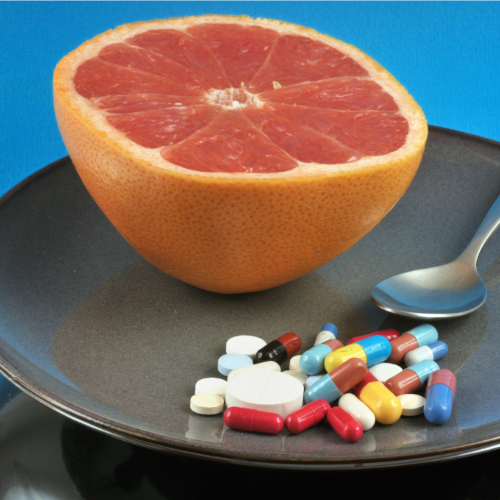
A drug–food interaction happens when a food, drink, or nutrient affects the way a medicine works in your body.
It can:
- reduce the medicine’s effectiveness (making it work less)
- increase the medicine’s effect (making it too strong or toxic)
- cause new side effects that wouldn’t happen with the medicine alone
- change how quickly the medicine is absorbed or removed from your body
👉 These interactions are not rare or theoretical. They happen every day often without anyone realising it.
🧠 How Do Drug–Food Interactions Happen?
There are several ways food and medicines can interfere with each other:
⏱ Absorption
Food in the stomach can slow down or block how quickly a medicine enters the bloodstream.
⚙️ Metabolism
Certain foods affect liver enzymes that break down medicines making them stronger or weaker than intended.
🔗 Binding
Some nutrients bind directly to medicines in the gut, preventing them from being absorbed properly.
🕐 Timing
Even the same food can interact differently depending on whether you take your medicine before, with, or after eating.
💊 The Most Important Drug–Food Interactions for Mothers & Parents
🩸 Iron Supplements + Food
Iron is one of the most commonly prescribed supplements in pregnancy and one of the most commonly taken incorrectly.
❌ Foods that REDUCE iron absorption:
- tea and coffee (tannins block iron)
- milk and dairy products (calcium competes with iron)
- whole grains and bran (phytates bind iron)
- taking iron with a heavy meal
✅ What IMPROVES iron absorption:
- Vitamin C — lemon juice, orange juice, amla
- Take iron on an empty stomach or with a light Vitamin C-rich snack
- Avoid tea/coffee for at least 1 hour before and after taking iron
👉 Many mothers are anaemic despite taking iron supplements simply because of how and when they take it.
🦴 Calcium Supplements + Iron Supplements
This is an extremely common issue in pregnancy.
❌ Never take calcium and iron at the same time.
They compete for the same absorption pathway in the gut. If taken together you absorb very little of either.
✔ Take iron in the morning on an empty stomach
✔ Take calcium at a different time midday or evening with food
☀️ Vitamin D + Fat
Vitamin D is a fat-soluble vitamin meaning it needs dietary fat to be properly absorbed.
✅ Take Vitamin D with a meal that contains some fat:
- full-fat curd
- a small amount of ghee or oil
- nuts or seeds
❌ Avoid taking Vitamin D on a completely empty stomach or with a fat-free meal absorption will be poor.
🍊 Folic Acid + Tea & Coffee
Many pregnant women take folic acid in the morning with their morning tea or coffee.
❌ This is a problem.
Tannins in tea and polyphenols in coffee can reduce folic acid absorption.
✔ Take folic acid with plain water
✔ Wait at least 30–60 minutes after your supplement before having tea or coffee
💊 Antibiotics + Dairy & Antacids
Certain antibiotics interact significantly with dairy and antacids.
❌ Tetracyclines and Fluoroquinolones (e.g., Ciprofloxacin):
- dairy products (milk, curd, paneer) reduce their absorption significantly
- antacids and iron supplements also block absorption
- take these antibiotics 2 hours before or after dairy or antacids
✅ Amoxicillin and Cephalosporins:
- can generally be taken with food, food actually reduces stomach upset
👉 Always check the label or ask your pharmacist about whether your specific antibiotic should be taken with or without food.
🫀 Thyroid Medicine (Levothyroxine) + Food
Levothyroxine is one of the most common medicines prescribed in pregnancy and one of the most sensitive to food interactions.
❌ These reduce levothyroxine absorption:
- food in general especially high-fibre foods
- soy products
- calcium supplements
- iron supplements
- coffee (even black coffee reduces absorption)
- antacids
✔ Always take levothyroxine on an empty stomach, 30–60 minutes before breakfast
✔ Avoid calcium and iron supplements within 4 hours of your thyroid dose
✔ This is not optional getting this wrong can mean your thyroid levels stay uncontrolled throughout pregnancy
🍋 Antacids + Acidic Foods
Antacids work by neutralising stomach acid but certain foods can work against them.
❌ Avoid taking antacids around the same time as:
- citrus juices (orange, lemon, tomato)
- carbonated drinks
- spicy or fatty foods
✔ Take antacids 1–2 hours after meals for best effect
✔ Do not take antacids within 2 hours of other medicines they can affect absorption of many drugs
🧂 High-Salt Foods + Blood Pressure Medicines
For mothers with pregnancy-induced hypertension or pre-existing BP conditions:
❌ High salt intake directly reduces the effectiveness of blood pressure medicines.
- pickles, papads, packaged foods, and excess salt in cooking all raise blood pressure
- this makes BP medicines work harder and may require dose increases unnecessarily
✔ A low-sodium diet works with your BP medicine, not against it
🥬 Vitamin K-Rich Foods + Anticoagulants (Blood Thinners)
Some mothers may be on anticoagulants (blood thinners like Warfarin or heparin) during pregnancy for clotting conditions.
⚠️ Vitamin K-rich foods can reduce the effect of Warfarin:
- leafy greens — spinach, methi, palak, coriander
- broccoli, cabbage, cauliflower
👉 This does NOT mean avoiding these foods they are nutritious and important. It means eating them consistently in similar amounts each week, so your medicine dose remains stable.
✔ Never suddenly increase or decrease these foods while on Warfarin
✔ Always inform your doctor about your typical diet
🍵 Herbal Teas + Prescribed Medicines
Many mothers drink herbal teas tulsi, ginger, shatavari, chamomile thinking they are always safe alongside medicines.
⚠️ Some herbal teas can interact with medicines:
| Herbal Tea / Supplement | Possible Interaction |
| Ginger (large amounts) | May increase bleeding risk with blood thinners |
| Chamomile | May enhance sedative effect of certain medicines |
| Shatavari | May interact with hormonal medicines |
| Liquorice (mulethi) | Can raise blood pressure; interferes with some medications |
| Green tea (large amounts) | Contains vitamin K; may reduce anticoagulant effect |
👉 An occasional cup of ginger tea is not a concern. But large amounts or daily medicinal doses of herbal products alongside prescription medicines need to be cleared with your doctor or PharmD.
👶 Drug–Food Interactions in Infants & Young Children
Babies and toddlers also experience drug–food interactions parents often don’t realise this.
🍼 Medicines Mixed Into Milk or Food
❌ Avoid mixing medicines into a full bottle of milk or a full bowl of food.
- if baby doesn’t finish the feed, they won’t get the full dose
- some medicines are inactivated by heat (if food is warm)
- some medicines taste unpleasant and may cause the baby to reject a food they previously enjoyed
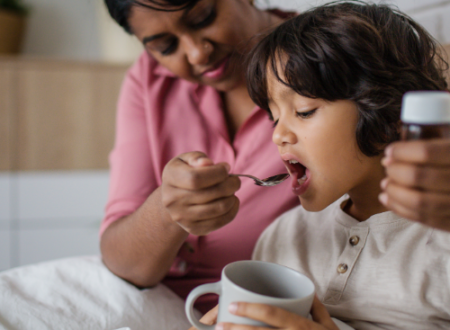
✔ Give medicines directly using a syringe or dropper
✔ If mixing is necessary, use a very small amount of food and ensure it’s all consumed
✔ Always ask your pharmacist if a specific medicine can be mixed with food
🍊 Antibiotic Suspensions + Juice
❌ Do not give antibiotic syrups mixed with fruit juice.
Citric acid in juices can break down certain antibiotics and reduce their effectiveness.
✔ Give antibiotic syrups with plain water or as directed
🥛 Tetracycline Antibiotics + Dairy (Older Children)
In older children prescribed tetracyclines:
❌ Avoid dairy products within 2 hours of the dose — calcium binds the antibiotic and prevents absorption.
⏱ A Simple Timing Guide for Common Medicines
| Medicine | Take With | Avoid |
| Iron supplement | Empty stomach + Vitamin C | Tea, coffee, dairy, antacids |
| Folic acid | Plain water | Tea, coffee |
| Vitamin D | Fatty meal | Fat-free foods |
| Levothyroxine | Empty stomach, 30–60 min before food | Coffee, soy, calcium, iron, antacids |
| Calcium | With food (different time from iron) | Iron supplements at same time |
| Most antibiotics | Check label — many with food | Depends on type |
| Antacids | 1–2 hours after meals | Other medicines within 2 hours |
| Paracetamol | With or without food | No major food interactions |
🧠 Common Myths About Drug–Food Interactions
❌ “Food doesn’t affect medicines only other medicines do”
👉 Completely false. Food, drinks, and even the timing of meals significantly affect how medicines are absorbed and processed.
❌ “I can take all my supplements together in the morning to save time”
👉 This is a very common mistake especially with iron and calcium. Always space them out as advised.
❌ “Herbal teas are completely safe alongside any medicine”
👉 Not true, herbal products are biologically active and can interact with prescribed medicines.
❌ “If I take medicine with food, it will always be absorbed better”
👉 This depends on the medicine. For some, food helps. For others like levothyroxine and iron food can significantly reduce absorption.
❌ “My doctor gave the medicine — I don’t need to worry about what I eat”
👉 Doctors prescribe medicines; pharmacists counsel on how to take them safely including around food. Always ask both.
💡 Practical Tips to Avoid Drug–Food Interactions
✔ Always tell your doctor and pharmacist everything you eat, drink, or supplement regularly
✔ Read the medicine label for food-related instructions they are there for a reason
✔ Space your supplements out through the day don’t take them all at once
✔ Never assume that “natural” foods and “natural” supplements are interaction-free
✔ If a medicine is not working as expected consider whether food timing could be the reason
✔ Keep a simple routine take each medicine at the same time each day for consistency
🌐 When to Consult a PharmD/ a Pharmacist
Your pharmacist is specifically trained in drug interactions including drug–food interactions.
Come and ask us when:
✔ You are starting a new medicine and want to know how to take it correctly
✔ You are on multiple supplements and want to know the ideal timing
✔ A medicine doesn’t seem to be working as expected
✔ You follow a special diet (vegetarian, high-fibre, low-sodium) and want to check for interactions
✔ You drink herbal teas or use Ayurvedic products alongside prescribed medicines
💛 A Gentle Message to Mothers & Parents
Taking a medicine is only half the step.
How you take it and what you take it with determines whether it truly works.
You deserve medicines that work fully and safely. And that starts with understanding the relationship between your food and your pharmacy.
Small changes in timing and habits can make a big difference in how well your treatment works.
✨ Final Takeaway
✔ Iron absorbs best on an empty stomach with Vitamin C away from tea, coffee, and dairy
✔ Never take iron and calcium at the same time
✔ Vitamin D needs fat to be absorbed properly
✔ Levothyroxine must be taken on an empty stomach no exceptions
✔ Herbal teas and supplements can interact with prescription medicines
✔ Timing matters ask your pharmacist how and when to take each medicine
💛 The right medicine + the right food habits = treatment that actually works.
Disclaimer
The information on this website is for educational purposes only and is not a substitute for professional medical advice. Always consult a qualified healthcare provider for personal medical concerns.